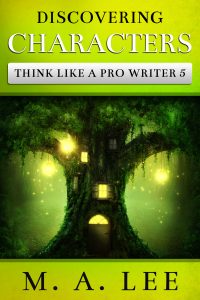
Head off to this link to read the opening to Genre Expectations, the first consideration when framing your story.
Discovering Your Plot
Plot

What do writers want from plot?
What do writers need from plot?
Are those questions the same? Not really.
As wordsmiths, we writers know that want and need are two different words.
- The want is a circumstance that we writers can control. We want plot specifics to help us craft story and exceed reader expectations.
- The need is a circumstance of obligations from reader expectations of story. While readers may want the comfort of the genre elements (the tropes), they also wish to have their interest and curiosity piqued.

Can we writers deliver on the expectations and the surprises in order to please our readers?
That’s the involved question that Discovering Your Plot hopes to answer.
This guidebook covers plot structure and the necessities of genre expectations so we writers can anticipate what readers want.
- It is NOT a list of tropes by genre or even a list of tropes that every novel should have.
It explores the six most common plot structures.
- It is NOT a list of characters for plot or story. It is not a list of the “17 characters your novel needs” or the “characters used by famous authors”, as listed on social media sites.
It is a detailed examination of the major sections of a novel.
- It is NOT a word-based or page-based formula of a novel’s structure.
By the end of Discovering Your Plot¸ writers will have the tools to construct a story as well as diagnose problems with pacing, tension and suspense, and sequencing events.
Discovering Your Plot is Book 6 in the Think like a Pro Writer series and the second of the Discovering set of how-to guidebooks for writers at all skill levels. While the approach is for newbies, every writer can benefit from this fresh look at any novel’s framework.
Think like a Pro Playlist Link
This link will take you to all 17 episodes on YouTube for Think like a Pro.
Listen on your favorite Podcast site:
https://eden5695.podbean.com/e/
apple podcast https://podcasts.apple.com/us/podcast/the-write-focus/id1546738740%20
spotify https://open.spotify.com/show/4fMwknmfJhkJxQvaaLQ3Gm?si=0GFku2PbShWXiDhRp7JaDQ
YouTube Channel Writers Ink Books – YouTube
Think like a Pro: New Advent for Writers is copyright 2017, with the revised edition in 2018. Podcast copyright is 2021.
Resources
Purchase Think/Pro at Amazon here: https://www.amazon.com/Think-like-Pro-Advent-Writers/dp/1983248266/
The Think/Pro planner for writers can be purchased here: https://www.amazon.com/Think-Pro-Planner-M-Lee/dp/1983248673/
Visit thewritefocus.blogspot.com for resources, links and a summary of this and other episodes.
Podcast: Play in new window | Download
November is the Fall Writing Challenge
November is the Fall Writing Challenge… and The Write Focus has got every
writer’s back.
November is writing only, 50,000 words in one month.
Fall on The Write Focus podcast is a series entitled “Enter the Writing Business” Check it out on the TWF website: Click here to go the current posts.
New Publications!
1st and 2nd are TWO Planners for Serious Writers. Visit the links for views of the interior of both planners.
Writing Nest: A Project Planner for Writers

- Plan those writing goals.
- Nest the projects; hatch as you achieve them.
- Celebrate victories; analyze challenges.
- Soar with Success with the Writing Nest.
Word Trekker: A Writer’s Word Count Planner
- Write more than ever before.

- Plan Projects. Plan Weekly Tasks.
- Track Words. Track Progress.
- Use the Triple Crown of Hiking as Motivation.
3rd is this ebook / paperback AND coming soon, the audiobook.
A Messy Miscellany For Writers
A Messy Miscellany for Writers crowds in information about craft and process,
productivity and tools, writing crimes to avoid, the how-can’s and why-should’s of writing guidance, and much more.
Offered by M.A. Lee and The Write Focus podcast.
https://books2read.com/u/38ezzB
Enhance your Writing with Sentence Craft
Enhance Your Writing
- How do you enhance your writing?
- What is enhancing our writing?
- Why do we do it?
Here are the answers for writers who want to improve their skills.
In the forests of words that we writers grow, blazed trails mark the way to our destination. Without those trails, without paths leading down to sun-sparkled streams, without the yellow brushstroke painted on tree after tree, we might lose our direction and our sanity.
Reading through that opening paragraph, most writers will recognize the extended hiking metaphor. Many will spot inversion and alliteration. A few will appreciate the anaphora and auxesis and zeugma, even when not familiar with those terms.
This is Sentence Craft. Controlled use creates appreciative readers. Over-blown use drives readers away.
Yet you can enhance your writing with simple techniques.
- Sentence Craft—from easy imagery to involved structures—is essential for the poet.
- Bloggers and other nonfiction writers will find it a marketing tool, distinguishing them from their competition.
- Speech writers and great broadcast journalists use these devices to make their spoken words become memorable.
- With fiction, writers paint expositions and settings and character tags, capturing readers who may not even recognize the sweeping stroke of the magical wand.
Discovering Sentence Craft is for writers new and old. For newbies, word-tricks can be fascinating ventures into an unknown forest. These tricks can renew a veteran writer’s love of words and sentences flowing onto the page.
In small offerings, of course. Too many tricks glaze our readers’ eyes.
Discovering Sentence Craft covers figurative and interpretive concepts as well as the structural elements that build meaning, emphasis, and memory.
Ways to Enhance Your Writing include ~
Concepts
I: Figurative
II: Interpretive
Structures
III: Inversion
IV: Repetition
V: Opposition
VI: Sequencing
Writer M.A. Lee believes writing is a skill-based craft which can be learned and practiced. Artists learn composition, perspective, depth, proportion, and shading. A baseball player learns in-field and out-field, pitching vs. throwing, batting and bunting. An electrician learns reading blueprints, voltage and current, circuits, outlets, and panels.
A writer needs much more than grammar and spelling. Reading widely, Discovering Sentence Craft concepts and structures, and practicing them will open doors for anyone who wants to improve.
Discover more ways here:
A Writer’s Halloween?
Listen to The Write Focus podcast on Horror Stories that Writers Tell.

Discovering Sentence Craft
Discovering Sentence Craft is celebrating its birthday!

In the forests of words that we writers grow, blazed trails mark the way to our destination. Without those trails, without paths leading down to sun-sparkled streams, without the yellow brushstroke painted on tree after tree, we might lose our direction and our sanity.
Reading through that opening paragraph, most writers will recognize the extended hiking metaphor. Many will spot inversion and alliteration. A few will appreciate the anaphora and auxesis and zeugma, even when not familiar with those terms.
This is Sentence Craft. Controlled use creates appreciative readers. Over-blown use drives readers away.
- Sentence Craft—from easy imagery to involved structures—is essential for the poet.
- Bloggers and other nonfiction writers will find it a marketing tool, distinguishing them from their competition.
- Speech writers and great broadcast journalists use these devices to make their spoken words become memorable.
- With fiction, writers paint expositions and settings and character tags, capturing readers who may not even recognize the sweeping stroke of the magical wand.
Discovering Sentence Craft is for writers new and old. For newbies, word-tricks can be fascinating ventures into an unknown forest. These tricks can renew a veteran writer’s love of words and sentences flowing onto the page.
In small offerings, of course. Too many tricks glaze our readers’ eyes.
Discovering Sentence Craft covers figurative and interpretive concepts as well as the structural elements that build meaning, emphasis, and memory.
Concepts
I: Figurative
II: Interpretive
Structures
III: Inversion
IV: Repetition
V: Opposition
VI: Sequencing
Writer M.A. Lee believes writing is a skill-based craft which can be learned and practiced. Artists learn composition, perspective, depth, proportion, and shading. A baseball player learns in-field and out-field, pitching vs. throwing, batting and bunting. An electrician learns reading blueprints, voltage and current, circuits, outlets, and panels.
A writer needs much more than grammar and spelling. Reading widely, Discovering Sentence Craft concepts and structures, and practicing them will open doors for anyone who wants to improve.