3 Planners for Writers

Why do Writers Need Planners?

I’m not just promoting 3 Planners here. I have a reason for creating each one.

The #1 guarantee of continual writing success is tracking your progress, with all the successes recorded. We writers have a tendency to focus on our current problems and set-backs.

While every publication is a major success, the daily grind often has us thinking we’re back-pedaling rather than advancing. Tracking our minor successes and checking off our benchmark goals provides us with the incentives we need to keep working.

Cover by Deranged Doctor Design

The Basic Planner: a Word-Count Focus

What helps writers achieve those two goals? For speed, we need to concentrate our mental energies on writing daily. For the long haul, we need to know our projects, current and next and future. When we focus on speed and longevity, we write more than we ever have before.

Word Trekker accomplishes these goals by advance planning for our projects and tracking our words daily, monthly, quarterly, and yearly.

Any hikers out there? This planner is for you. Match those words to the step-count for the Triple Crown of Hiking.

  • Pacific Crest Trial > 2,650 miles
  • Continental Divide Trail > 3,100 miles
  • Appalachian Trial > 2,193
  • AT international extension into Canada 1,319 >> 2, 193 with 1,319 = 3,512

One hiking mile = 100 words. As hikers venture along each trail, they trek from state to state. Setting the Triple Crown of Hiking as a writing goal keeps us going through the year.

Much less than $1 a month, this 6 x 9 planner helps you work toward One Million Words in a Year. Click the link to discover more.

Cover by Deranged Doctor Design

Think in Projects Rather than Words?

Plan those writing goals. Nest the projects; hatch as you achieve them. Celebrate victories; analyze challenges. Soar with Success with the Writing Nest.

Long-term goals are easy to set. Breaking the long-term goals into short-term goals helps us slog through the slow times. Those slow slogs can lead us to think we’re not achieving, yet a simple record will keep us motivated to continue on.

Where can we keep that record of achievements, short-term and long-term? A daily system that builds to mid-term benchmarks and seasonal achievements. That system should help us not only record our achievements but also set our long-term and short-term goals.

Sized 8 x 10, this undated planner (priced for $1 a month) lets us start anytime, taking breaks between projects or powering through the year. Click for more info.

cover by Deranged Doctor Design for Writers Ink Books
Cover by Deranged Doctor Design

The Planner for Newbies

Want to make writing a commitment rather than a hobby? Striving for professional publication rather than wannabe status? The Think/Pro planner helps make the conversion from newbie to writing pro.

$1 a month, this undated planner tracks word counts and healthy habits, offers creativity tips and tax tips, offers progress meters for projects and a weekly inspirational quote from a major writer.

In addition to the weekly spread with a Top 3 Task List are Monthly Reviews & Previews and Seasonal & Yearly Planning pages.

The Monthly Review has a Productivity Tracker and a Progress Meter as well as places to jot down Business Contacts and Expenses. Seasonal Previews ask you to polish the nuts and bolts of your projected words per week and sharpen up the time remaining before your deadline.  At the end of every month, the planner offers a record for victories as well as upcoming challenges.

Time to change “Seize the Day” into “Seize the Dream.”  For success, we need to Think/Pro.  This 8 x 10 planner will help.


Celebrate a Book Birthday!

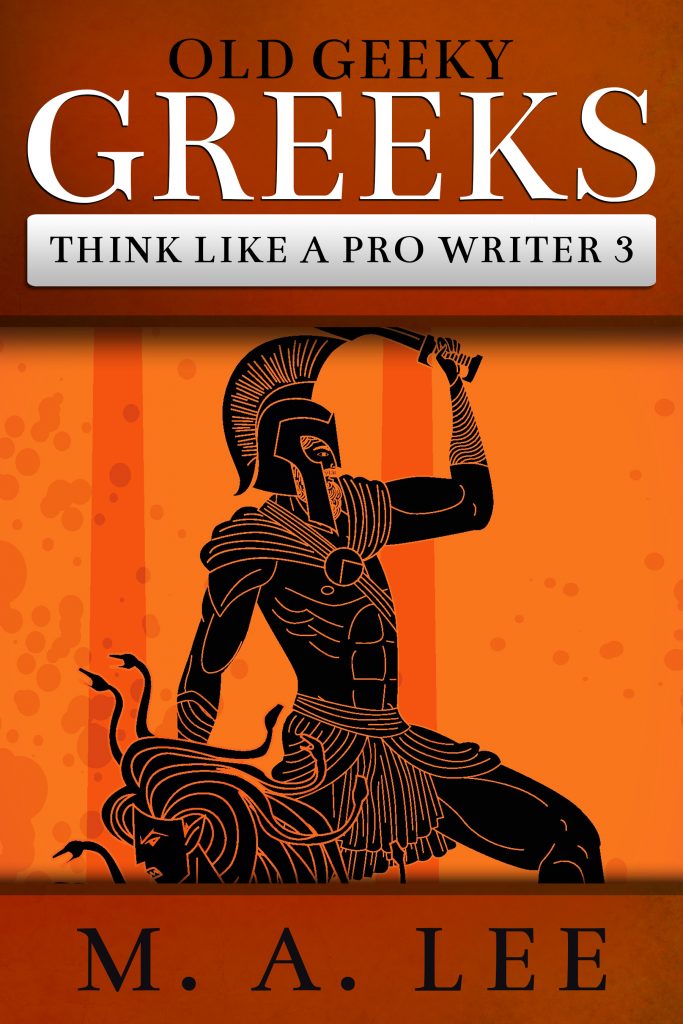
On this day in 2017, M.A. Lee published Old Geeky Greeks, third in the Think like a Pro Writer series.

We published with one cover. At the end of 2019, as part of the year-long updates to the entire Think like a Pro Writer series, our cover designers Deranged Doctor Design came up with this wonderful cover.

Here’s information for this book. Click the link to Amazon to purchase.

What do these have in common?

Atonement. I, Robot. The 13th Warrior. The Hobbit. Jurassic Park, in all its iterations.

Harry Potter. Ironman. Perseus. Dudley Dooright. Macbeth.

5 Stages of the Hero and the Monster. Blood tragedies. The scariest woman in all literature. Hubris.

These oddly-matched items all have origins in the ancient Greeks and Romans.

The first storytellers discovered many ways to intrigue and thrill their audiences.  They laid strong foundations for what worked and what didn’t work. Their techniques are still used, re-packaged as exclusive insights, glittery infographics, three-point seminars, and Wham-Pow webinars urging modern writers to Buy Now!

Old Geeky Greeks: Write Stories with Ancient Techniques presents these techniques in a clear, organized method for writers.

Chapters in OGG cover understanding characters, plot requirements and the oldest plot formula (the Blood or Revenge Tragedy), and such concepts as in medias res and dulce et utile and more, all to solve the sticky problem of audience expectations.

The bright minds of Classical Antiquity first explored that problem, and the answers that they developed are applicable in this age of the internet, special effects, and infographics.

Save yourself the hours spent at seminars and in webinars or scanning social media. Spend that time writing—and study the Old Geeky Greeks at your leisure. Whether writing novels or plays, blogs or non-fiction, poems and songs, this guidebook offers information to improve your writing.

Old Geeky Greeks is a seminar in book form, 28,000 words of time-proven techniques.

Writer M.A. Lee has published 25-plus titles under various pen names since she began self-publishing in 2015. She has over 30 years of experience in guiding college and high school students as they examined, analyzed, and applied these techniques.

Defeat Writer’s Block

For Writers

The monster we call Writer’s Block has 3 manifestations, and we reveal them on The Write Focus podcast.

created by Emily R. Dunn
Audiobook and Ebook publishing in the Summer as part of the Summer Writing Challenge.

It’s a Series on this slimy bugbear > that really doesn’t exist.

Episodes started in February.

Introduction to the Series https://eden5695.podbean.com/e/506-defeat-writers-block-introduction/

Overcoming Type 1 https://eden5695.podbean.com/e/507-defeat-writers-block-overcoming-type-1/

Overcoming Type 2 https://eden5695.podbean.com/e/508-defeat-writers-block-type-2/

Overcoming Type 3 https://eden5695.podbean.com/e/509-defeat-writers-block-overcoming-type-3/?token=be9e8379ee2ebd4690d8f7f70ee115a5

Episodes continue with Pro Writers’ Advice on Defeating Writer’s Block.

5 + 5 Writers give snippets of advice which we examine. Part A and Part B. Here’s the Link to Part A

Two episodes for the blockbuster master writer Erle Stanley Gardner on techniques to overcome the unmentioned unmentionable. Here’s the Link to the 1st for Gardner.

Judy Delton’s advice on the block from her 29 Most Common Writing Mistakes and How to Avoid Them. Available by April 20 :: link to first of 2 episodes.

Mary Stewart on the Writing Flow, revealed through her fictional characters in The Stormy Petrel: link available after April 20.

Kate Wilhelm’s writing memoir Storyteller offers several things to say on Writer’s Block: link available after April 30.

Sophy Burnham offers her musings on the causes emotional and intellectual for Writer’s Block. Available after May 5.

The grand finale to the series is the Grande Dame of American Romantic Mystery and Suspense, Phyllis A. Whitney, available after May 15.

Enjoy these as they become available (here’s a link to the playlist on YouTube)

OR

Purchase the ebook, paperback, or audiobook when it becomes available this Summer.

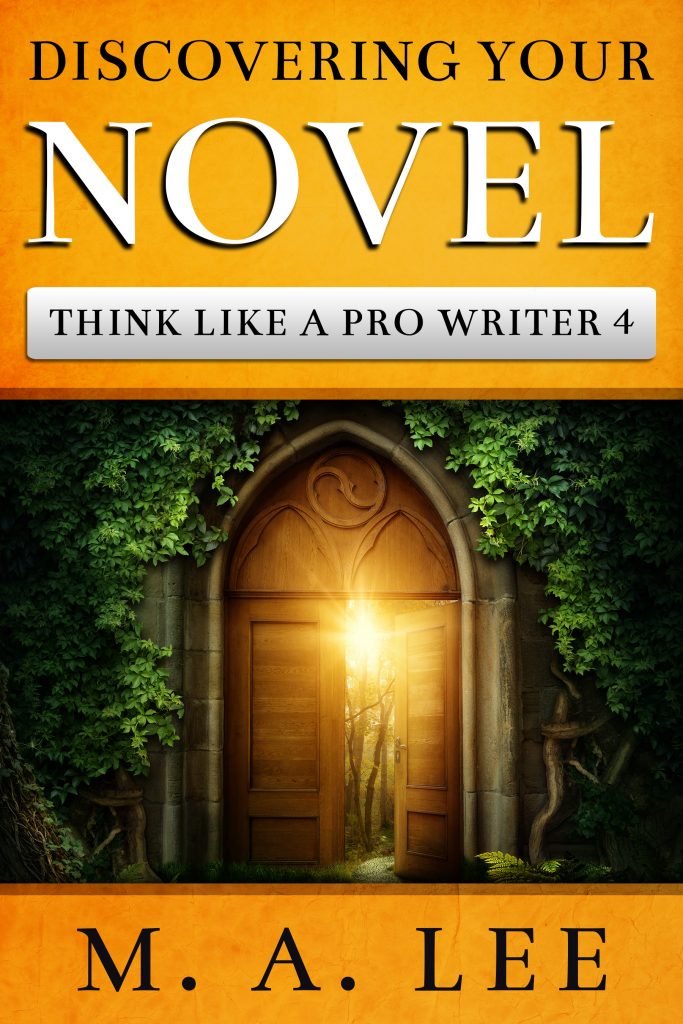
Discovering Your Novel

What kind of writer are you?  Planner or Plotter?  Pantster?  Puzzler?  Muse Muffin?

Whether you use the mosaic method or a chronological one, whether you outline every scene or let the words flow, the method does not matter.  What matters is the end goal.

So, what’s the end goal with your writing?  Just to write?  To publish?  Fame and fortune?

Plenty of frittery flutter-bys write and write and go nowhere.  As for fame and fortune, those can’t be guaranteed.

However, when your goal is publication, Discovering Your Novel is the guidebook to help you overcome the Sisyphean task of first word to publication.

With the goal of completing a novel in 52 weeks, this guidebook can be self-paced or tracked week by week for persistent success.

  • If you have a half-completed manuscript that you’re lost in, use the Foundations and Visioning sections to work your way out of the labyrinth.
  • If the story’s a mucky mire more like quicksand than a novel you can build on, use the Analysis section to clear away the mud and weeds.
  • Like a long ball of string, the multiple charts will help you keep track of where you’ve been and where you will head next.  Printable charts are available for free at the website address provided in the guidebook
  • When you complete the manuscript, what do you do next?  The sections on Harvesting and Finishing answer these questions as they guide you to creating a professional career as a writer.

Launch your writing journey at your current location on the publishing road—incipient idea or character sketches or story plan or struggling manuscript or completed novel looking into publication.

Track your progress with daily word counts recorded on the charts.

Learn the devices and definitions that pro writers have swirling in their heads.

Maintain the discipline and preparation that keeps pro writers at work, no matter the interruptions.

Writer M.A. Lee meandered along the road of unfinished manuscripts and completed novels with nowhere to publish for many years before she decided to drive to her own destiny.  If you’re tired of gatekeepers and pay-to-play schemes, if you’re weary of elitist traditional publishers and you’re eager to jump on the self-publishing juggernaut, then Discovering Your Novel will give the guidance you need.

*Discovering Characters* ~ Write Focus Podcast

Celebrate the Annivesary of Discovering Characters!

One of the hardest things to do in writing is to create characters that readers  will care about, that will make them have to read on. ~ Noah Luke

Discovering Characters is like investigating a house we want to buy.

No, I’m serious. Characters have an exterior façade that we comment upon as we drive past. Through the windows we catch glimpses of interior lives.

Even in cookie-cutter boxy cliques, characters have individual characteristics, just as the suburbia ranch houses have their garden plantings and the urban row houses have their painted doorways. These small touches create individual homes in neighborhoods.

Some characters enjoy the bright city lights. Some are loners, nestled against a national forest.  Characters, houses—each have individual personalities. Some are blingie, with the latest décor while others enjoy the comfort of yoga pants and old sneakers.

As writers, we capture these individual characters and save them from the cookie-cutter boxy stereotypes. We delve into interior rooms for glimpses of formative baggage. Finding their backstory is a search through attics and cellars, storage closets and garages. Characters hide their pain and fears, painting them over and adding distracting artwork.

Our job as writers is to find every detail of our characters then use snippets so our readers will see our characters as they drive through our books. We hint at the foundations while opening doors to their plans and purposes.

Discovering Characters is designed to help writers find the exteriors and interiors, public and private. We’ll dig around the foundations and climb to the roof. We’ll explore the open rooms and the storage closets. We’ll peek into rooms inhabited by such characters as diverse as Elizabeth and Darcy, the Iron Man, Aragorn and Frodo, Travis McGee, Medea, Macbeth, and Nanny McPhee.

Five areas comprise this guidebook. Just as characters—and houses—are individual, this info is individual. You won’t need every bit. Dip in and out, skim around. When you reach locked rooms, come back and explore to discover the keys to your characters.

  1. Starting Points ~ offering templates and character interviews
  2. Classifications ~ common and uncommon ways of discovering characters
  3. Relationships ~ couples, teams, allies, enemies, mentors, etc.
  4. Special Touches ~ progressions, transgressions, and transitions for character arcs
  5. Significant Lists ~ archetypal characters and much more

Discovering Characters, with 44,000-plus words, is the second book in the Discovering set, part of the Think like a Pro Writer series for writers new to the game as well as those wanting to up their game.

Click this link to take advantage of special summer savings.

Writer M.A. Lee has been indie-publishing fiction and non-fiction since 2015. She has over 50 books published under her pseudonyms. Visit www.writersinkbooks.com to discover more information.